
Theo Barnett
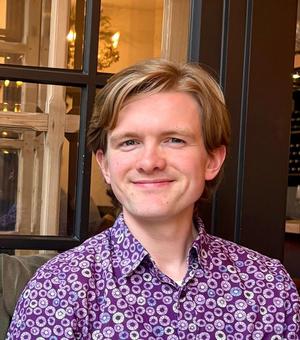
My doctoral research examines the ‘human document’, a literary genre of transnational origin, in Russophone émigré literature and intellectual life in interwar Europe (1919-1940).
The human document was conceived by nineteenth-century French naturalism as an experimental form of the novel, pioneering “scientific” literary methods of observing and recording sociological facts. Having migrated to Russia through the works of Edmond de Goncourt and Emile Zola, the French human document found numerous Russian antecedents, in the naturalist school and the growth of documentary writing in Russia since the 1840s. There the human document subsequently mutated into an autobiographical form akin to literary memoir, acquiring a Symbolist inflection during Russia’s Silver Age. The human document followed the post-revolutionary emigration from the former Russian Empire (back) to Europe, where in émigré literature it was popularised as a confessional mode of writing, representing exilic experience in fictional narratives modelled on private diaries, letters and other first-person forms.
Locating the human document at various intersections of Russian and European literatures, of documentary and imaginative writing, and of literary and intellectual history, my research assesses the genre’s critical importance to the literary practices and cultural discourses of the interwar emigration. In surveying a broad range of émigré literary and print culture from the 1920s and ’30s, I explore the human document’s role in the transnational migration of forms between émigré and European literary cultures, its intervention in contemporaneous debates concerning the cultural identity and vocation of émigré literature and, more broadly, its implications for the study of Russian literature and culture in exile.
This research draws on my previous academic work on the transnational contexts of early twentieth-century Russophone literary and visual cultures. During undergraduate and graduate degrees at the University of Cambridge I cultivated an interest in comparative methodologies, intermediality, translation, publishing and other cultural networks between the Russophone world, Europe and the Americas: my studies in early Soviet literary, artistic and cinema cultures culminated in an MPhil dissertation on Sergei Eisenstein’s readings of European and Latin-American Modernism and his evolving epistemology of the cinema during his travels abroad and the making of his unfinished film, ¡Que viva México! (1930-32).
My current doctoral project is co-funded by the AHRC Open-Oxford-Cambridge Doctoral Training Programme and the Clarendon Fund.

